Every year the same number shows up in the growth reports: 2.63 percent annual population growth, a pace that trails only Mesquite among Nevada's established cities, and Mesquite's entire population would fit inside North Las Vegas several times over. Every year Apex Industrial Park adds another distribution operation, another shift of forklift drivers and logistics technicians, another few thousand paychecks that need somewhere to sleep. And every year the median home price in North Las Vegas moves by an amount you could round to zero.
That combination should not hold. Population growth and job growth are the two forces that are supposed to push a housing market upward, and in most fast-growing cities they do exactly that. In North Las Vegas they haven't, at least not yet, and the reason tells a buyer something the median price on its own never will: which pocket of this city you choose matters more than the fact that you're choosing this city at all.
The Growth Isn't in Dispute
North Las Vegas counted 261,164 residents at the 2020 census. By 2026 that figure had climbed to 304,442, a gain of nearly 16.6 percent in six years, posting the second-fastest annual growth rate of any established Nevada city. The jobs side of the story is just as concrete. Apex Industrial Park anchors more than 6,500 acres of warehouse, logistics, EV manufacturing, and data center development on the city's northeast edge, with Amazon, Kroger, Sephora, and Faraday Future all operating facilities on site. None of that is projection. It's already built, already staffed, and already pulling new households into the city every quarter.
The Price Line That Refused to Follow
Here's where the story gets interesting, and where the disagreement between trackers is itself the evidence. Pull North Las Vegas data from three different sources covering roughly the same window in 2026 and you get three different signs. One tracker's February 2026 read put the median at $415,000, up 2.2 percent year over year. A separate housing data service, looking at the same month, put it at $410,923, down 1.6 percent from a year earlier. A third read, this one for July 2026, placed the median for existing single-family homes near $435,000.
Notice what those three numbers have in common: they land within about $25,000 of each other, and none of them describe anything close to a boom. In a city adding population at 2.63 percent a year and absorbing thousands of new logistics jobs, you'd expect the price signal to be loud and directional. Instead it's quiet enough that analysts using different methodologies can't even agree on whether it went up or down last year. That's not volatility. That's a market that has found a ceiling and is sitting under it.
Why the City Keeps Absorbing People Without the Price Spike
The answer is dirt, and specifically how much of it North Las Vegas still has left to build on. Summerlin, the valley's flagship master plan, is roughly 85 percent built out. Henderson's two largest active communities, Inspirada and Cadence, are moving through their final phases. North Las Vegas is the one large submarket in the valley that still has meaningful undeveloped acreage, and builders are using every acre of it in real time.
Four master plans are doing the heavy lifting right now: Valley Vista, the Villages at Tule Springs, Sunstone, and Heartland. KB Home announced land development for one Tule Springs project, Sandstone at Tule Springs, with home construction expected to begin in 2026 as part of the broader Villages at Tule Springs plan. National builders including Century Communities and D.R. Horton are active elsewhere in the city's new-construction corridor as well. A live feed of Greater Las Vegas Association of Realtors listings pulled in July 2026 counted 95 new-construction homes across the city at a median list price of $465,000, roughly $141,450 below Henderson's new-build median of $606,450 that same month.
This isn't builders quietly cutting corners to hit a price point either. The city has paired the housing pipeline with actual park infrastructure. Craig Ranch Regional Park, at roughly 170 acres, includes a skate park, dog parks, competition fields, tennis and basketball courts, community gardens, and an amphitheater. Aliante's Nature Discovery Park gives that master plan its own lake and playground anchor. When a city builds full communities alongside the housing rather than housing alone, it can keep adding supply for years without the product quality dropping off, which is exactly what's needed to keep matching a population that's growing at 2.63 percent a year.
One Median, Several Markets
The citywide median is also hiding something. April 2026 listing data across North Las Vegas neighborhoods show a spread that's easy to miss if you only look at the top-line number:
| Submarket | Median Price (April 2026) |
|---|---|
| Downtown North Las Vegas | ~$350,000 |
| Aliante | ~$416,700 |
| North Las Vegas (citywide) | ~$429,900 |
| Eldorado | ~$524,900 |
| Tule Springs | ~$700,000 |
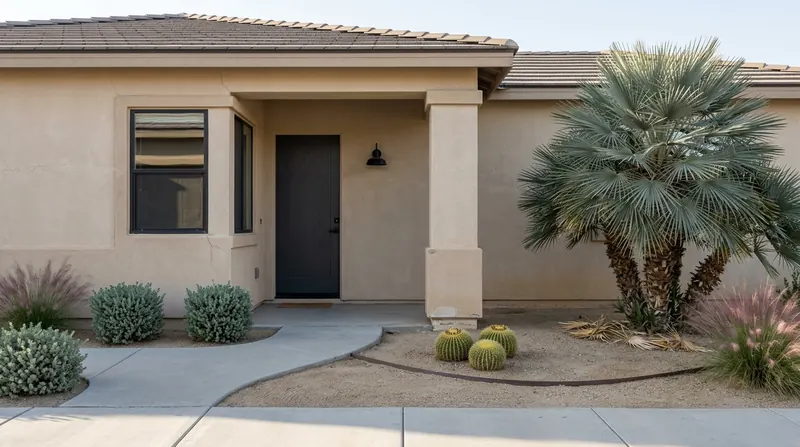
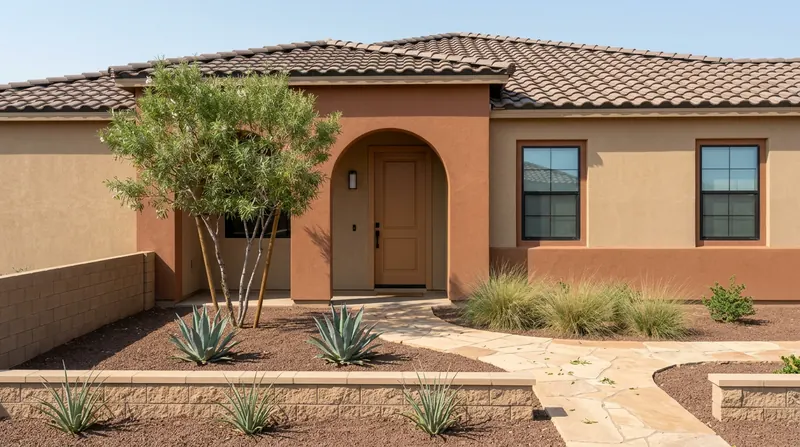
That's a spread of more than $350,000 inside a single city. Downtown buys older, established stock at the lowest entry point in the valley. Aliante buys a finished master plan with a casino, golf, and a mature trail network already in place. Eldorado's higher number reflects a more conventional suburban layout with larger, older lots. Tule Springs sits at the top in large part because so much of its inventory is new construction, with the trade-off being retail, schools, and services that are still catching up to the rooftops.
A buyer comparing "North Las Vegas" against another part of the valley using the citywide median is really comparing a blend of four distinct submarkets against a single number somewhere else. The more useful comparison is submarket to submarket.
The Fee Line New Construction Buyers Miss
There's a transaction-level detail worth flagging for anyone shopping new construction specifically in the Tule Springs area. Special improvement district assessments there typically run $1,400 to $2,400 a year, layered on top of standard property tax and any HOA dues. It's a manageable number, but it's also not one that shows up on the price tag or the builder's glossy floor plan sheet. Anyone comparing a $465,000 new build against a similarly priced resale elsewhere in the city should pull the parcel's SID balance before writing an offer, because it changes the real annual cost of ownership in a way the sale price alone doesn't reflect.
What the Flat Line Actually Tells a Buyer
The lesson here isn't that North Las Vegas is a bad bet. It's that fast population growth and fast job growth don't automatically translate into fast price appreciation when a city still has room to build its way to meet demand. That's a structural condition, not a warning sign, and it's the reason North Las Vegas has remained one of the more attainable entry points in the valley even as it adds residents faster than almost anywhere else in the state.
It also means the calculus changes once the land runs out. Summerlin's 85 percent build-out and Henderson's winding-down master plans show what happens on the other side of that math: appreciation tends to pick up once a city stops being able to answer demand with new supply. North Las Vegas isn't there yet, but a buyer thinking in a five to ten year window should be watching the remaining acreage at Valley Vista, Tule Springs, Sunstone, and Heartland as closely as the monthly price report, because that's the number that will eventually move the other one.
If you're weighing North Las Vegas against another part of the valley, or trying to figure out which submarket inside the city actually fits your budget and your timeline, that's exactly the kind of comparison worth working through with someone who tracks it closely. Casanova Realty works across the Las Vegas metro with buyers making this call every month. Schedule a strategy consultation and we'll walk through the numbers for the specific pocket of North Las Vegas you're actually considering, not just the citywide average.