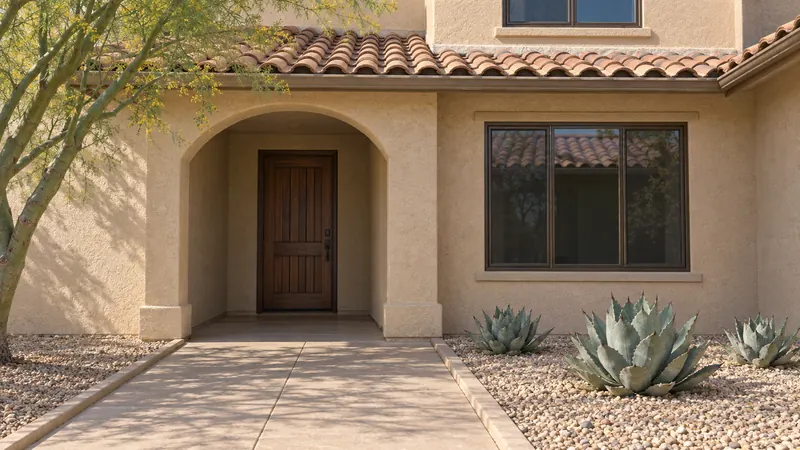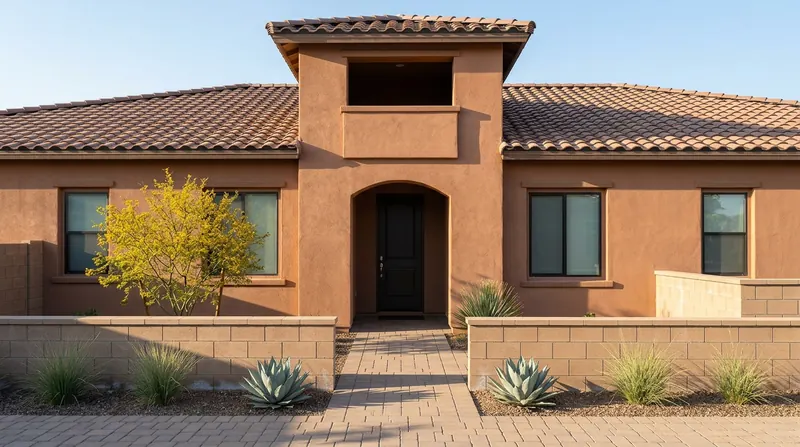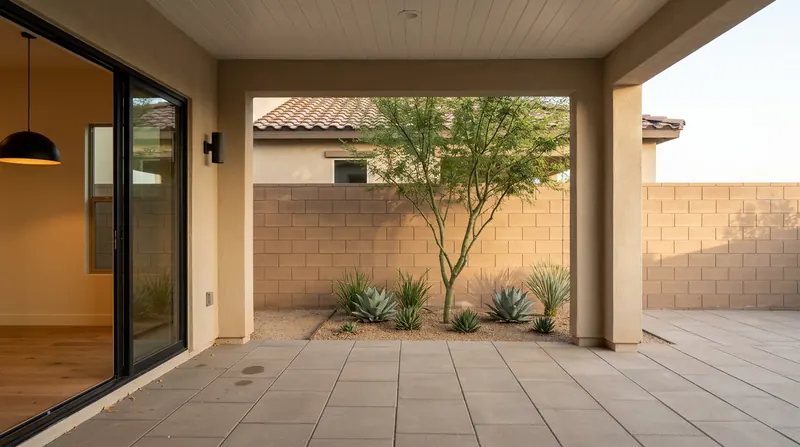
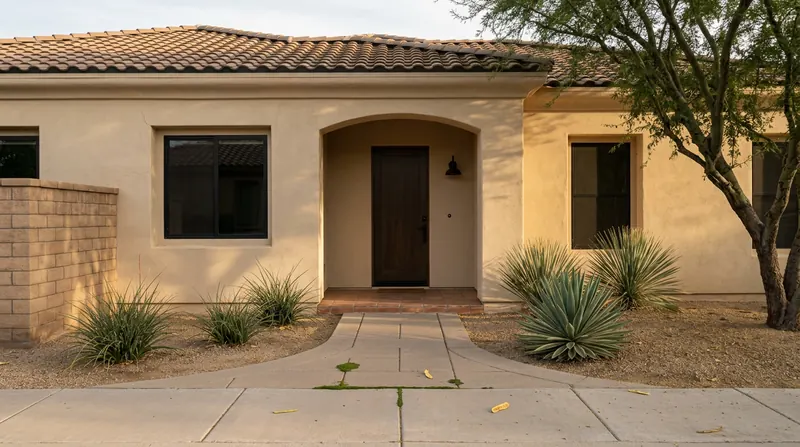
Picture the moment: you have toured a model home in Redpoint, fallen for the elevated sightlines and the fresh drywall smell, and the sales rep hands you a sheet with one HOA number on it. That number is not the number. Somewhere between the purchase agreement and your first Clark County tax bill, a second fee shows up, then sometimes a third. Buyers in Summerlin's newest villages discover this in roughly that order, usually after they have already picked their cabinet finishes.
That discovery is not just a paperwork annoyance. It is a window into a pattern worth understanding before you write an offer anywhere in Summerlin: the villages generating the most excitement right now, the ones with the newest floor plans and the biggest builder incentives, are also the ones showing the least price movement. Meanwhile the older, land-locked villages that nobody is touring for the granite countertops keep quietly compounding value. If you are comparing new construction in Summerlin West against resale in an established village like The Trails or The Pueblo, the fee structure and the appreciation pattern are pointing at the same underlying story.
The Three-Layer Bill Nobody Adds Up Front
Summerlin runs on a two-tier association structure at minimum, three tiers in many neighborhoods, and it catches buyers off guard more than any other line item in the transaction.
Effective January 1, 2026, all three master associations raised their monthly assessments. Summerlin North went from $65 to $74 a month. Summerlin West rose from $60 to $69. Summerlin South moved to $76. Built into every one of those numbers is a $37 monthly share that funds the Summerlin Council, the entity behind the community's parks, trails, and event programming, which itself increased by $7 a month as part of the same round of budget approvals, according to the Las Vegas Review-Journal's reporting on the association's newsletter announcement.
That master fee is only the opening line. On top of it sits a village or sub-association fee that varies enormously depending on where you land. In a standard, non-gated Summerlin neighborhood, expect something in the $40 to $100 a month range. Cross into a gated enclave and that number climbs to $200, sometimes past $900 a month once you include guard-gated luxury villages. The Ridges, for example, layers its own association fee on top of the master assessment, and residents there routinely see combined monthly HOA costs above $500. Sun City Summerlin, the community's 55-plus section, runs its own sub-association near $230 a month and adds a one-time $5,000 fee at closing that new residents do not always see coming.
Then there is the third layer, the one that never shows up on the HOA statement at all: Special Improvement District and Local Improvement District assessments. These are not HOA dues. They are bond repayments for the roads, sewer lines, and street lighting that had to go in before anyone could build a house, and they ride on your Clark County property tax bill as a separate line item. Paying off your SID does nothing to your HOA fee, and paying your HOA in full does nothing to your SID balance. They are two different obligations funding two different things, and the mistake of treating them as one line is the single most common budgeting error in a Summerlin purchase.
The pattern in where these balances land is not random. Older villages such as The Trails and The Pueblo largely have their original SID bonds paid off by now, since those districts were formed decades ago. Newer villages in Summerlin West, including Stonebridge and the Redpoint corridor, typically carry active balances that can add somewhere in the neighborhood of $1,300 to $2,800 a year to a homeowner's tax bill, on top of whatever HOA tier applies.
Why the Newest Villages Are Barely Moving
Here is where the fee structure and the price data start telling the same story from two different directions.
As of spring 2026, Summerlin West carried a median price near $800,000, the highest of any section of the community, but its year-over-year growth had slowed to roughly 0.3 percent, essentially flat. Summerlin South, sitting at a lower median around $712,766, was still climbing at closer to 2.2 percent over the same period. Zillow's tracked average home value for Summerlin South told a similar story from a different angle: as of May 31, 2026, that figure sat at $718,682 and had moved 0.0 percent over the prior twelve months. Different methodologies, same shape: the newest, most heavily marketed section of Summerlin is the one struggling to compound value, while the more mature sections keep grinding upward or at minimum holding flat rather than sliding.
This is not a coincidence of timing. Summerlin West is where nearly all of the community's active new construction sits right now, spread across five actively selling villages including Kestrel, Stonebridge, Redpoint, Reverence, and the newly emerging Grand Park. Builders including Toll Brothers, Pulte, Richmond American, Taylor Morrison, Lennar, Tri Pointe, and Woodside are all competing for the same pool of buyers in that stretch of the valley, and every one of them has incentive to move inventory with rate buydowns and design credits rather than let a resale comp set the price. A resale home in Stonebridge is not just competing against the house two doors down. It is competing against a builder actively discounting a brand-new floor plan a quarter mile away.
Established villages do not have that problem. There is no vacant land left in The Trails or The Pueblo for a builder to break ground on, no sales office undercutting the resale market with a 2.99 percent first-year rate. Every home sold there is genuinely scarce, and scarcity, not square footage or subway tile, is doing the heavy lifting on price.
None of this means Summerlin West is a poor place to buy. It means the reasons to buy there are different from the reasons to expect fast appreciation. If you want a newer floor plan, modern wiring, and proximity to Red Rock Canyon views, Summerlin West still delivers that. If your primary goal is near-term equity growth, the math currently favors the older, built-out villages where scarcity is doing what new-home incentives cannot.
Running the Comparison Before You Choose a Village
The practical move is to stop comparing sticker prices and start comparing all-in monthly carrying costs, village by village, before a floor plan tour makes the decision emotional.
Start with the master fee, which is fixed by which of the three geographic associations your address falls under, currently $69 to $76 a month depending on North, South, or West. Add the sub-association fee for the specific village or gated enclave, which your builder or listing agent should itemize separately rather than folding into one number. Then pull the Clark County tax bill or ask your title officer directly whether an active SID or LID balance attaches to that parcel, since two homes on the same street can carry completely different assessment situations depending on when their particular phase was bonded.
A $700,000 home in a standard Summerlin West neighborhood with an active SID and a $650,000 resale home in an older village with a paid-off SID and a modest sub-association fee can differ by $300 a month or more in total carrying cost. That is $3,600 a year, and every dollar of it counts against your debt-to-income ratio when a lender is deciding what you qualify for. Buyers who only budget the number on the listing sheet are the ones who get the unpleasant surprise at underwriting, not at closing.
Frequently Asked Questions
If I pay off my SID balance at closing, does that lower my HOA fee? No. The SID or LID is a public infrastructure assessment collected through the county tax bill. Your HOA dues, master and sub-association, are a completely separate private obligation that continues regardless of your SID status.
Why did Summerlin's HOA fees increase for 2026 specifically? According to the Summerlin community's own budget disclosures reported by the Las Vegas Review-Journal, the increases were driven by rising park and open space maintenance costs, higher insurance premiums, added personnel and labor costs, utility increases, and reserve fund contributions across all three master associations.
Does a guard-gated village change this math significantly? Yes. Guard-gated enclaves like The Ridges or Red Rock Country Club add their own sub-association tier on top of the master fee, and that layer alone can run into the hundreds of dollars a month. Always request the full fee stack itemized before assuming a listed HOA number is complete.
Village selection in Summerlin is not just a lifestyle decision. It is a carrying-cost decision and an appreciation-timing decision wrapped into one, and the two rarely point the same direction as the marketing brochure suggests. If you are weighing new construction against resale anywhere in Summerlin and want the real numbers run for your specific shortlist, Casanova Realty can walk through the full fee stack and village comparison with you. Schedule a strategy consultation and we will build the math before you fall for the floor plan.