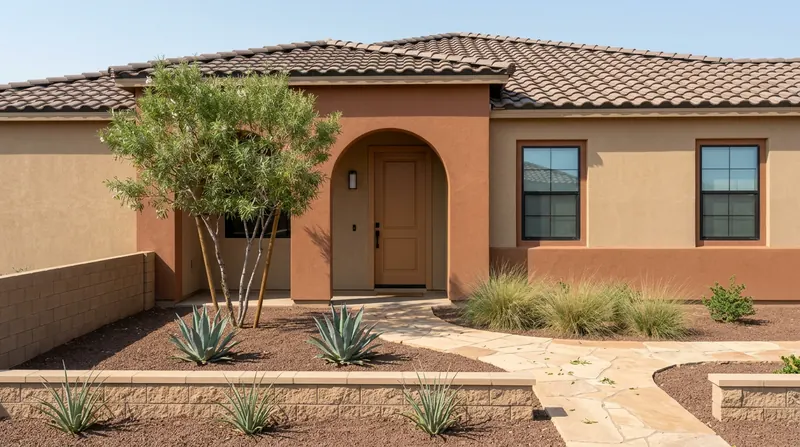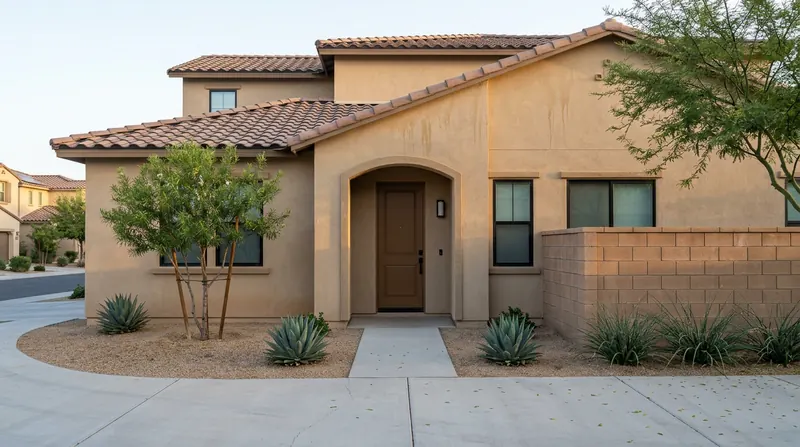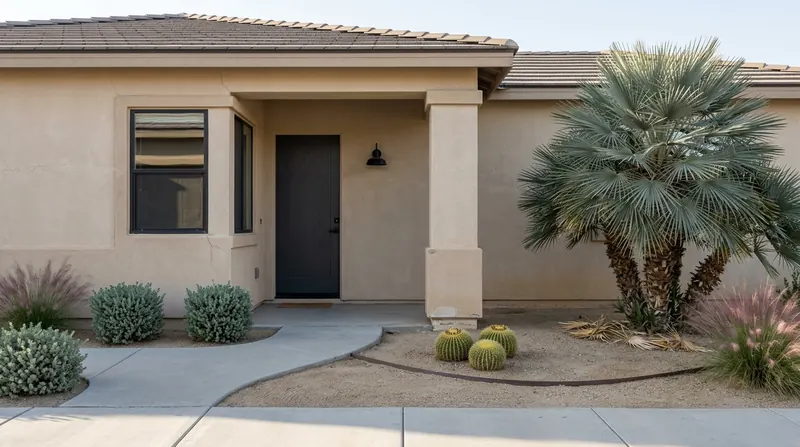
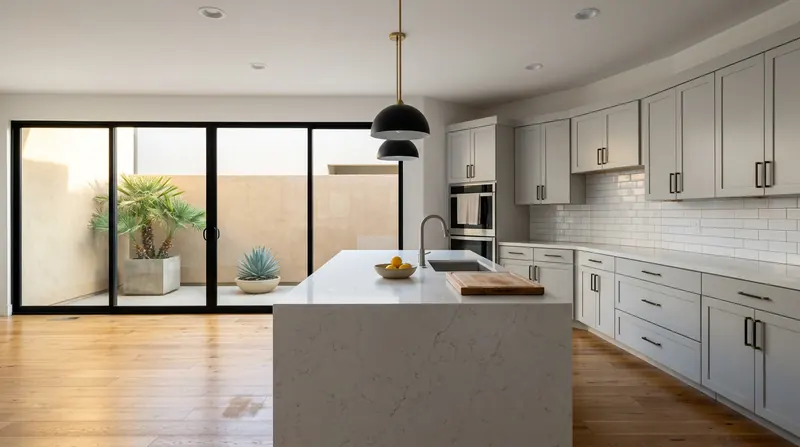
A production home in Cadence and a final-phase resale in Inspirada can list within a few thousand dollars of each other this fall, and a buyer touring both back to back will walk away thinking the math is basically the same. It isn't. The difference doesn't show up on the for-sale sign, the listing sheet, or even the HOA disclosure a buyer skims before closing. It shows up on the property tax bill, months after move-in, as a separate line item that has nothing to do with the homeowners association at all.
That line item is a Limited Improvement District assessment, and whether a Henderson buyer's new-construction home carries one depends less on the home than on which master plan it sits in.
The Fee That Doesn't Live on the HOA Statement
Henderson's two biggest active and recently active new-construction communities, Cadence in the east and Inspirada in the south and west near St. Rose Parkway, both fund their infrastructure through some combination of homeowners association dues and public assessments. But they don't fund it the same way, and that difference compounds over the life of ownership.
Cadence's master HOA runs about $75 a month, billed at $225 a quarter, and covers roughly 450 acres of parks, trails, and common areas. Individual neighborhoods layer on sub-association fees of $40 to $105 a month depending on amenities, and the age-restricted Heritage at Cadence section runs a flat $180 a month. What most Cadence homes don't carry is a Special Improvement District or Limited Improvement District charge, because the community has donated its park acreage to the City of Henderson for maintenance rather than funding it through a long-term bond repaid by homeowners.
Inspirada runs a different model. The base community assessment sits around $95 a month, with an additional $41 a month for residents in sections with Toll Brothers clubhouse access. On top of that, homes in many Inspirada phases carry a Limited Improvement District assessment of $40 to $60 a month, tied to the infrastructure bond that built out the specific pod the home sits in. Depending on when that pod was platted, the LID can run for another 10 to 20 years before it's paid off.
| Cadence | Inspirada | |
|---|---|---|
| Base HOA | ~$75/month master | ~$95/month base |
| Additional fees | $40-$105/month sub-association; $180/month for Heritage 55+ | Up to $41/month for clubhouse access |
| Infrastructure assessment | Mostly none | LID of $40-$60/month for 10-20 years, phase-dependent |
| Where it appears | HOA statement | Property tax bill, separate from the HOA ledger |
That last row is the part that catches buyers off guard. The LID doesn't show up when scrolling listings by price, and it doesn't appear on the HOA disclosure packet the way monthly dues do. It shows up on the closing disclosure, then again on every property tax statement afterward, filed alongside county assessments rather than community dues.
What a Decade and a Half of That Assessment Actually Costs
Run the math on the $40 to $60 a month range reported for Inspirada's LID phases in 2026, and a 15-year term adds $7,200 to $10,800 to the cost of ownership, money that never touches the base purchase price and never shows up in a mortgage pre-qualification unless someone specifically asks about it. Stretch that to a 20-year term, the longer end of what's been reported, and the total climbs past $14,000.
None of that makes Inspirada a worse buy. It funded the parks, trails, and infrastructure that make the community feel finished rather than under construction, and a buyer who wants a mature master plan with a brand-new house is paying for exactly that. But it does mean that a Cadence home and an Inspirada home priced within a few thousand dollars of each other are not actually the same monthly commitment, and a buyer comparing offer sheets side by side needs the all-in number, not just the sticker.
The Community-Wide Median Is Averaging Different Neighborhoods Together
The fee structure is only half the story. The other half is that neither community is really one market, and quoting a single median for either one flattens meaningful differences a buyer would notice the moment they toured two streets apart.
Inspirada is built as seven villages of 200 to 250 acres each, and those villages don't price the same way. In closed sales tracked from early February through the first week of August 2026, the gated enclaves in Village 3, including Alterra, Porta Di Ferro, and Milano, carried a median sale price of $775,000. Village 6, on the community's western edge, was the busiest resale market by volume and the better value on a per-square-foot basis, closer to $230 a square foot. A buyer comparing "Inspirada" to "Cadence" using a single citywide number is really comparing an average of those two very different villages against whatever Cadence section happens to be selling that month, which is its own moving target.
Cadence has the same problem in reverse. Its builder roster spans D.R. Horton Express, KB Home, and Lennar at the entry-production end, starting around $425,000, up through Pulte's Del Webb 55+ section in the $525,000 to $850,000 range, up to Toll Brothers and Tri Pointe Reserve luxury inventory above $1,000,000 and running past $1,400,000. Most active inventory as of mid-2026 sits in the $475,000 to $850,000 band, but that band spans production homes and near-luxury homes that share a community name and not much else.
The practical takeaway: a "Cadence is more affordable than Inspirada" or "Inspirada holds value better" comparison based on a single median from each side is comparing two averages, not two markets. The village or section a specific home sits in tells a buyer more than the community name on the sign.
The Buildout Clock Is Different, and That Changes the Leverage
There's a timing asymmetry between the two communities that matters for anyone weighing new construction specifically. Inspirada opened in 2007 and is now down to its final builder sections, with roughly 75 new-construction homes remaining across KB Home, Toll Brothers, and Tri Pointe as of mid-2026. Final-phase pricing runs from the mid-$500,000s for remaining production homes up to over $1,050,000 for the last Toll Brothers luxury inventory. Once that inventory sells, Inspirada converts fully to a resale market, and the negotiating dynamics that come with builder incentives and closing-cost credits go with it.
Cadence is earlier in its cycle. The 2,200-acre master plan is roughly half built out as of mid-2026, with eight or more active builders including Pulte, Lennar, KB Home, Toll Brothers, Tri Pointe, Taylor Morrison, Richmond American, and D.R. Horton, and most estimates put two to three or more years of active building ahead. That means a buyer choosing Cadence today is choosing a community that will keep adding neighborhoods, amenities, and construction activity for years, while a buyer choosing new construction in Inspirada is choosing one of the last opportunities to do so at all.
Neither timing is better in the abstract. A buyer who wants a settled, finished community with mature trees and completed parks has reasons to prefer Inspirada's position even with the LID. A buyer who wants years of builder incentives and rate buydowns ahead of them has reasons to prefer Cadence's runway. But the two communities are not interchangeable options at the same point in their life cycle, and treating them that way misreads the decision.
What to Ask Before Comparing Two Offer Sheets
- Request the current LID or SID balance and remaining payoff term in writing, not verbally, for any Henderson new-construction home under consideration.
- Confirm which village or pod the home sits in, since community-wide medians in both Cadence and Inspirada mask meaningful village-level price differences.
- Ask whether a sub-association or clubhouse access fee applies on top of the base HOA, since these are billed separately and easy to miss on a first walkthrough.
- Pull the property tax bill structure, not just the HOA ledger, to see where an infrastructure assessment would actually appear.
- Build one all-in monthly number, mortgage plus HOA plus any LID or sub-association fee, before comparing two communities on price alone.
Frequently Asked Questions
Does a Limited Improvement District assessment transfer to a new owner when the home sells? Yes. The LID is attached to the property and the bond that financed the original infrastructure, not to the original buyer personally, so a new owner takes on whatever balance and term remain at the time of purchase.
Is new construction still available in Inspirada? As of mid-2026, yes, but the window is narrow. Roughly 75 homes remain across the final sections from KB Home, Toll Brothers, and Tri Pointe, with pricing from the mid-$500,000s to over $1,050,000. Once that inventory sells, the community becomes resale only.
Does Cadence have anything that functions like a LID? Most Cadence homes do not carry a Special Improvement District or Limited Improvement District charge. The community's park and common-area land has largely been donated to the City of Henderson for maintenance, which is part of why the HOA structure stays lighter than communities that fund infrastructure through a long-term bond.
The number that decides whether Cadence or Inspirada is the better fit for a specific buyer isn't the price on the sign. It's the combination of the fee structure, the village or section a home sits in, and where each community stands in its own buildout timeline. If you're weighing a new-construction purchase in either community and want the current LID balance, village-level comps, and builder incentive details pulled together before you write an offer, Casanova Realty can walk through the numbers with you. Schedule a strategy consultation and we'll build the all-in comparison before you tour your next model home.